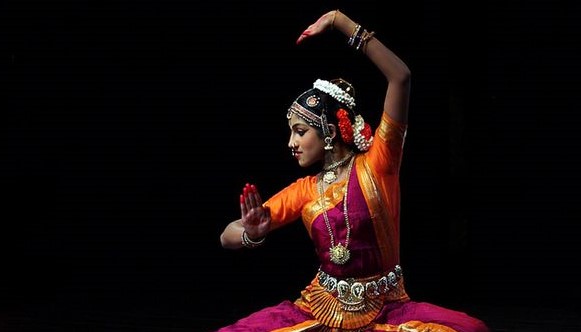
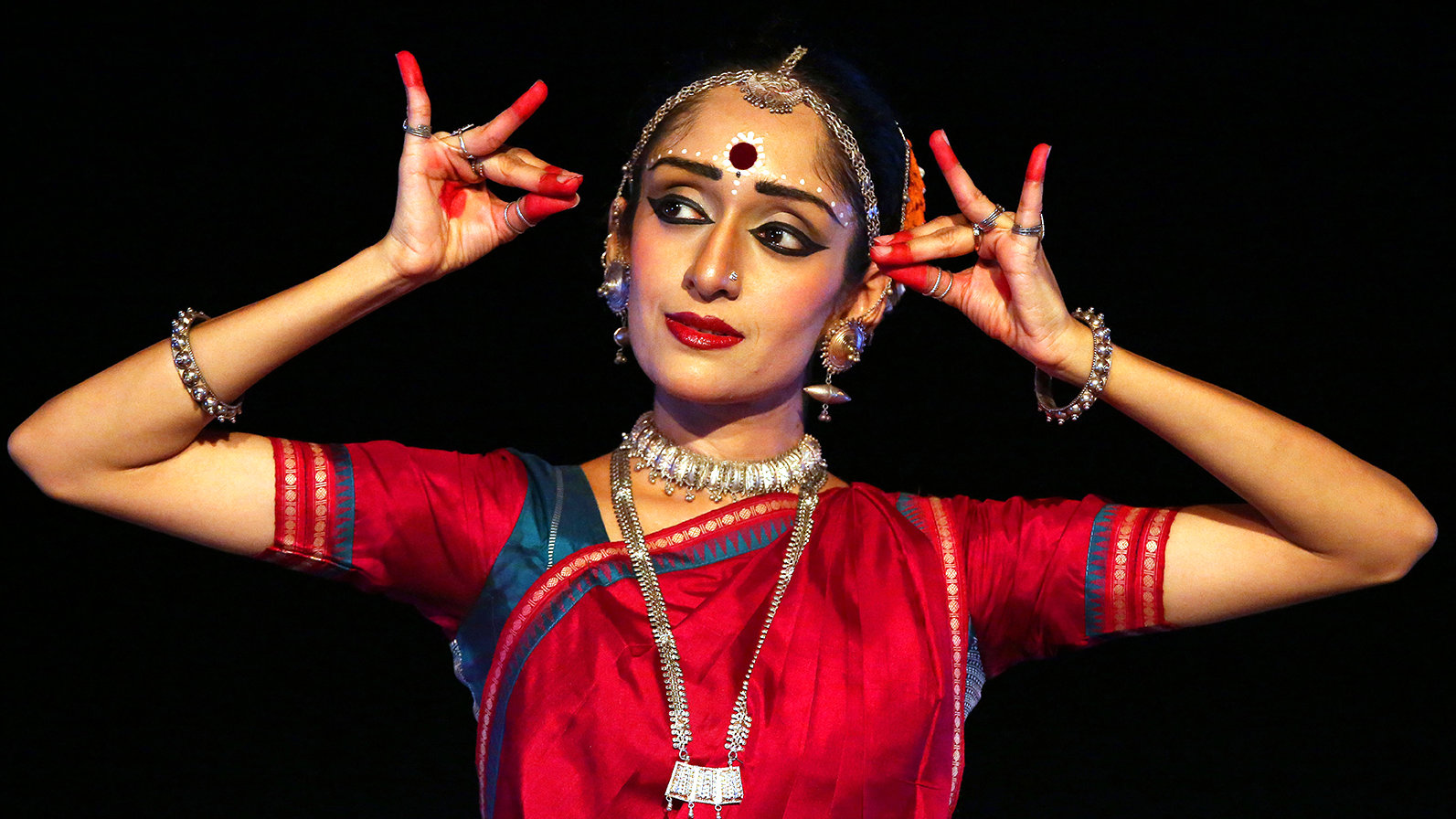
Rukmini Devi Arundale (29 February 1904-24 February 1986) was an Indian theosophist, dancer and choreographer of the Indian classical dance form of Bharatanatyam, and an activist for animal welfare. She was the first woman in Indian history to be nominated as a member of the Rajya Sabha, the upper house of the Parliament of India.
Bharatanatyam is an tamil classical dance form that originated in Tamil Nadu.It is one of eight Indian classical dance forms recognized by the Sangeet Natak Akademi, and expresses South Indian religious themes and spiritual ideas, particularly of Shaivism and in general of Hinduism.
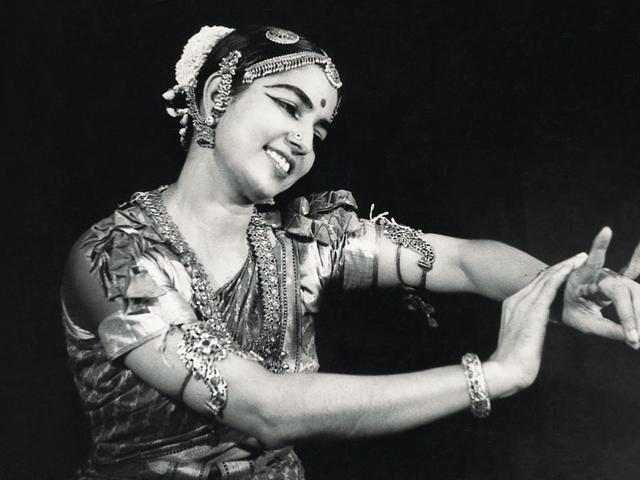
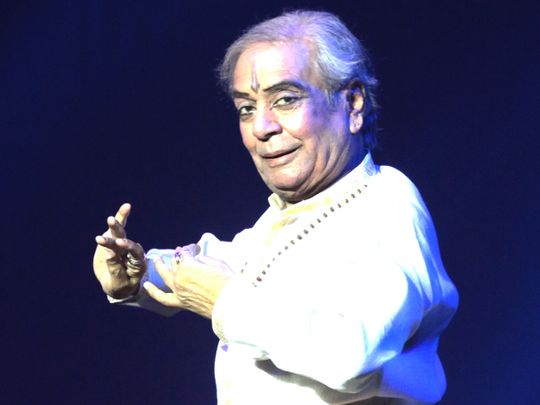
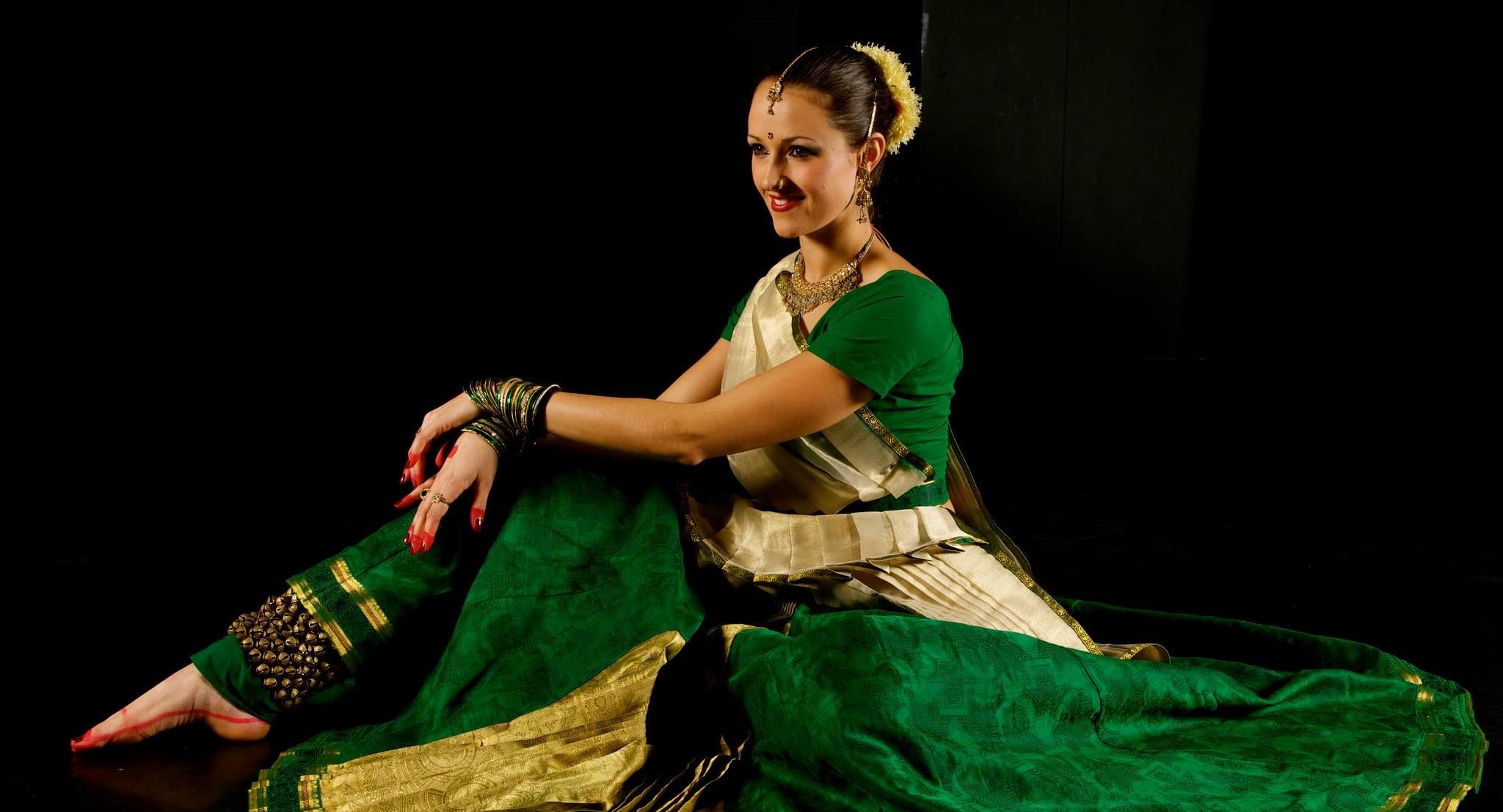
Pandit Birju Maharaj (4 February 1938-16 January 2022) was an Indian dancer, composer, singer, and exponent of the Lucknow "Kalka-Bindadin" Gharana of Kathak dance in India. He was a descendant of the Maharaj family of Kathak dancers, which includes his two uncles, Shambhu Maharaj and Lachhu Maharaj, and his father and guru, Acchan Maharaj. He also practised Hindustani classical music and was a vocalist.
Kathak is one of the eight major forms of Indian classical dance. It is the classical dance form from Uttar Pradesh. The origin of Kathak is traditionally attributed to the traveling bards in ancient northern India known as Kathakars or storytellers. The term Kathak is derived from the Vedic Sanskrit word Katha which means "story", and Kathakar which means "the one who tells a story", or "to do with stories".
Kalamandalam Krishnan Nair (27 March 1914-15 August 1990) was a Kathakali dancer from Kerala in India. He learned and exhibited various styles of Kathakali. He is a recipient of Padma Shri, Sangeet Natak Akademi Award,Kerala Sangeetha Nataka Akademi Award,and Kerala Sangeetha Nataka Akademi Fellowship.
Kathakali is a major form of classical Indian dance. It is a "story play" genre of art, but one distinguished by the elaborately colourful make-up and costumes of the traditional male actor-dancers. It is native to the Malayalam-speaking southwestern region of Kerala and is almost entirely practiced and appreciated by Malayali people.
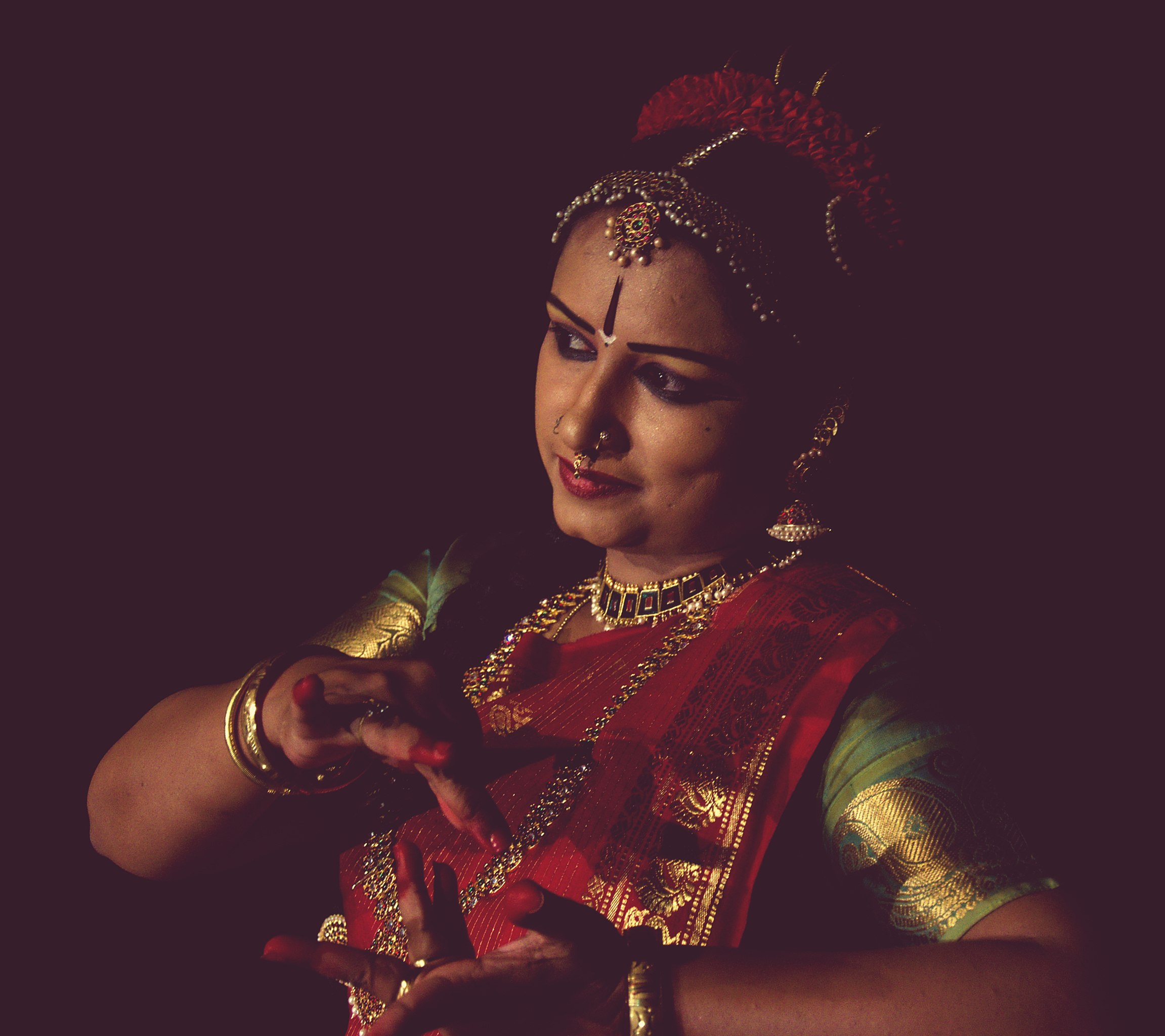
Deepa Sashindran (born 3 July 1974) is an Indian artist and a disciple of the Kuchipudi expert Smt. Manju Bhargavi. She is a performing artist, teacher of the Indian classical dance form Kuchipudi, choreographer, art curator, entrepreneur, and the founder of Kuchipudi Parampara Foundation Trust Bangalore.
Kuchipudi is one of the eight major Indian classical dances. It originates from a village named Kuchipudi in the Indian state of Andhra Pradesh. Kuchipudi is a dance-drama performance, with its roots in the ancient Hindu Sanskrit text of Natya Shastra.
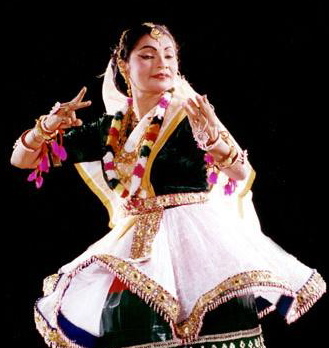
Darshana Jhaveri (born 1940), the youngest of the four Jhaveri sisters, is a leading Indian exponent of Manipuri dance, an Indian classical dance form. She is a disciple of Guru Bipin Singh, and started performing on stage in 1958 along with her sisters. She is one of the founders of the Manipuri Nartanalaya in 1972, which popularized Manipuri dance in India, and is currently headed by her, with centres at Mumbai, Kolkata and Imphal.
The Manipuri Dance, also referred to as the Manipuri Raas Leela, is a jagoi and is one of the eight major Indian classical dance forms, originating from the state of Manipur. The dance form is imbued with the devotional themes of Madhura Raas of Radha-Krishna and characterised by gentle eyes and soft peaceful body movements. "Manipuri dance" redirects here. For dance styles of Manipur, see Dances of Manipur.
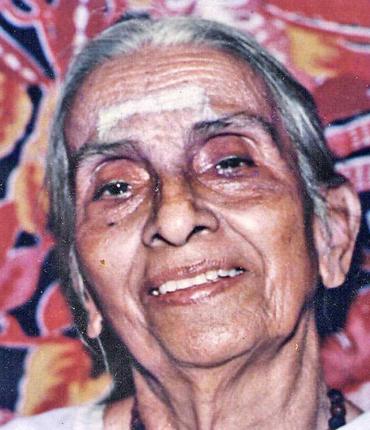
Kalamandalam Kallyanikutty Amma (1915-1999) was an epoch-making Mohiniyattam danseuse from Kerala in southern India. A native of Thirunavaya in Malappuram district of the state, she was instrumental in resurrecting Mohiniyattam from a dismal, near-extinct state into a mainstream Indian classical dance, rendering it formal structure and ornamentation. Kalyanikutty Amma, one of the early-batch students of Kerala Kalamandalam, was married to the late Kathakali maestro Padma Shri Kalamandalam Krishnan Nair.
The term Mohiniyattam comes from the words mohini meaning a woman who enchants onlookers and aattam meaning graceful and sensuous body movements. Thus, the word Mohiniyattam literally means-dance of the enchantress. Mohiniyattam has a legend attached to it as per the Hindu mythology.
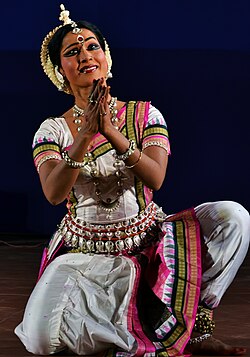
Sujata Mohapatra was born in Balasore in 1968. She started learning Odissi at an early age from Guru Sudhakar Sahu. Sujata Mohapatra came to Bhubaneshwar, Odisha, in 1987 to further her training under Padma Vibhushan Guru Kelucharan Mohapatra at Odissi Research Center in Bhubaneshwar.
Odissi, also referred to as Orissi in old literature, is a major ancient Indian classical dance that originated in the temples of Odisha-an eastern coastal state of India. Odissi, in its history, was performed predominantly by women, and expressed religious stories and spiritual ideas, particularly of Vaishnavism through songs written and composed according to the ragas & talas of Odissi music by ancient poets of the state.