

This article is about the indoor sports facility. For the fitness club, see Health club. For the school class known as "gym", see Physical education. For other uses, see Gym (disambiguation) and Gymnasium (disambiguation). Inside a gymnasium in Amsterdam A gym, short for gymnasium (pl.: gymnasiums or gymnasia), is an indoor venue for exercise and sports. The word is derived from the ancient Greek term "gymnasion". They are commonly found in athletic and fitness centres, and as activity and learning spaces in educational institutions. "Gym" is also the commonly used name for a "fitness centre" or health club, which is often an area for indoor recreation. A "gym" may include or describe adjacent open air areas as well. In Western countries, "gyms" often describe places with indoor or outdoor courts for basketball, hockey, tennis, boxing or wrestling, and with equipment and machines used for physical development training, or to do exercises. In many European countries, Gymnasium (and variations of the word) also can describe a secondary school that prepares students for higher education at a university, with or without the presence of athletic courts, fields, or equipment.
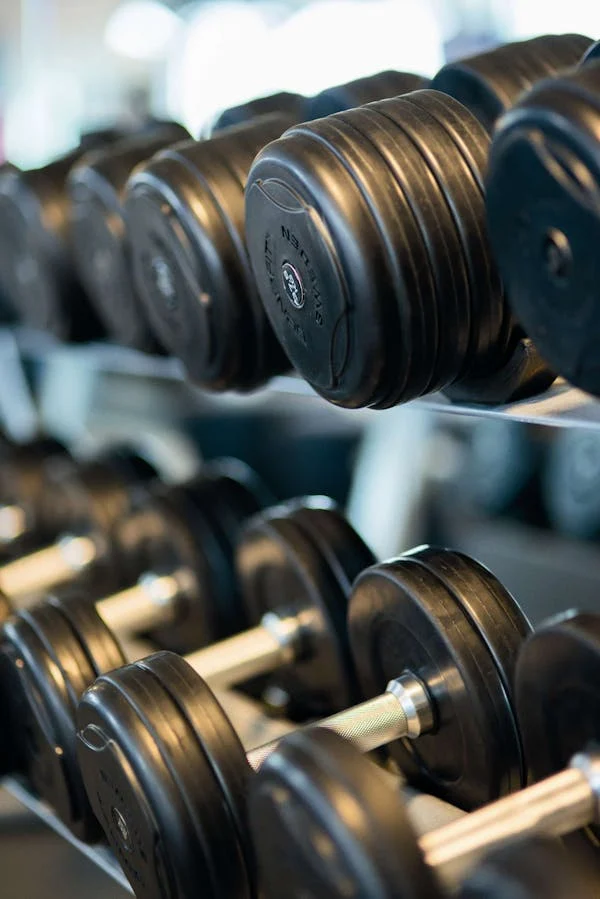
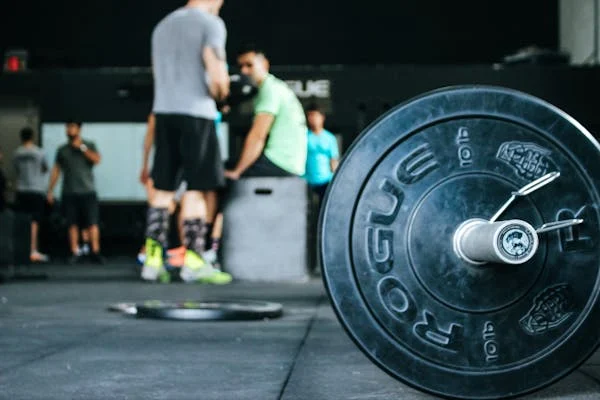
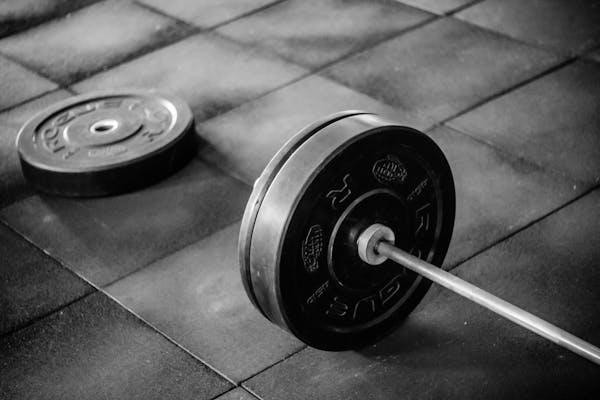

In Gymnasiums, apparatus such as barbells, bumper plates, kettlebells, dumbbells, resistance bands, jumping boards, running paths, tennis balls, cricket fields, and fencing areas are used for exercises. Outdoor settings are healthiest when the weather is safe. Gyms were popular in ancient Greece. Their curricula included self-defense, gymnastics medica, or physical therapy to help the sick and injured, and for physical fitness and sports, from boxing to dancing to skipping rope. Gymnasiums also had teachers of wisdom and philosophy. Community gymnastic events were done as part of the celebrations during various village festivals. In ancient Greece there was a phrase of contempt, "He can neither swim nor write." After a while, however, Olympic athletes began training in buildings specifically designed for them. Community sports never became as popular among ancient Romans as it had among the ancient Greeks. Gyms were used more as a preparation for military service or spectator sports. During the Roman Empire, the gymnastic art was forgotten. In the Dark Ages there were sword fighting tournaments and of chivalry; and after gunpowder was invented sword fighting began to be replaced by the sport of fencing, as well as schools of dagger fighting and wrestling and boxing.




The first recorded gymnasiums date back to over 3000 years ago in ancient Persia, where they were known as zurkhaneh, areas that encouraged physical fitness. The larger Roman Baths often had attached fitness facilities, the baths themselves sometimes being decorated with mosaics of local champions of sport. Gyms in Germany were an outgrowth of the Turnplatz, an outdoor space for gymnastics founded by German educator Friedrich Jahn in 1811 and later promoted by the Turners, a nineteenth-century political and gymnastic movement. The first American to open a public gym in the United States using Jahn's model was John Neal of Portland, Maine in 1827. The first indoor gymnasium in Germany was probably the one built in Hesse in 1852 by Adolph Spiess. Through worldwide colonization, Great Britain expanded its national interest in sports and games to many countries. In the 1800s, programs were added to schools and college curricula that emphasized health, strength, and bodily measure. Sports drawn from European and British cultures thrived as college students and upper-class clubs financed competition. As a result, towns began building playgrounds that furthered interest in sports and physical activity.