|
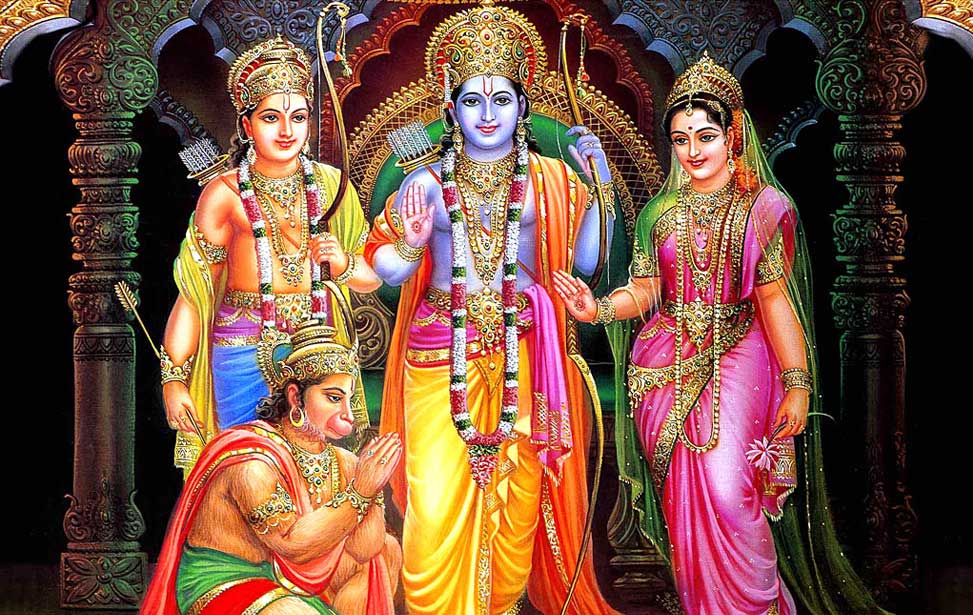
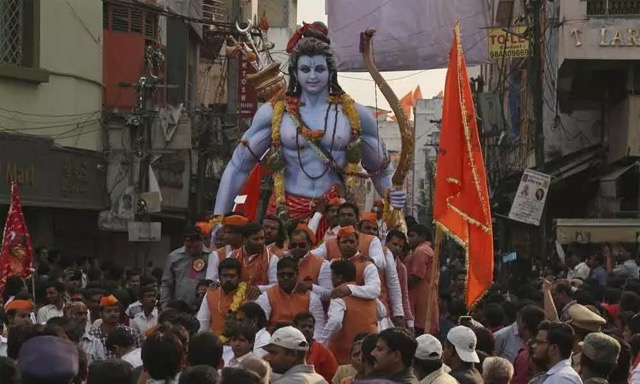
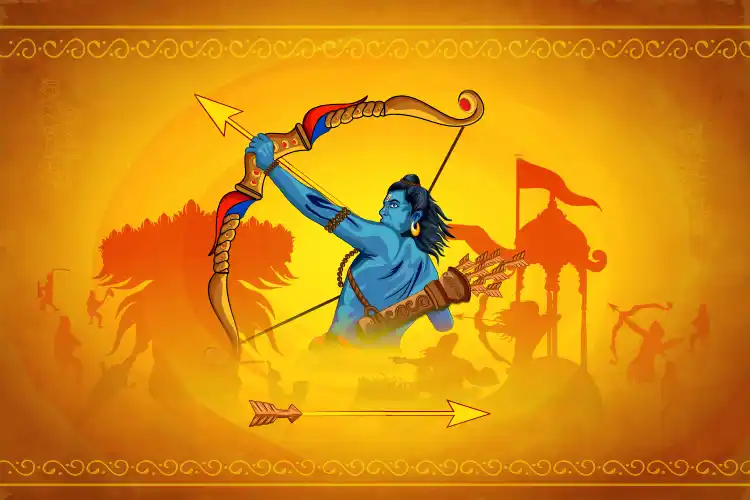
This festival celebrates the birth of Lord Rama who is an incarnation of Lord Vishnu. This festival is celebrated during the time of March-April (the 9th day of the first month of the Hindu calendar). Lord Rama, who became king of Ayodhya, was known for His exemplary qualities. He was popular, brave, kind, just, intelligent, patient, loving, obedient and dutiful. Lord Rama is always worshiped with his consort Sita, brother Lakshmana and devotee Hanuman. The worship of Lord Rama is accompanied by the worship of the Sun god since Ram was considered to have descended from the sun, or is in the Solar dynasty. Ram Navami celebrations include reading the great epic Ramayana and staging plays of the Ram Lila, or the pastimes of the life of Lord Rama. |
 |
|
Ram Navami is one of the oldest festivals celebrated in India. It is said that the date of Ram Navami can be seen back to the pre-Christian era, as Hinduism is the oldest religion of the world. The reference of Ram Navami can also be found in the Kalika puran. It is said in the prior times when caste system was common in India; Ram Navami was one of the few festivals that the lower castes were granted to celebrate. In Hindu religion, it is considered to one of the five major holy festivals and it is said that properly observing this fast leads to the attainment of salvation.
Every year, the month of March-April observes a flurry of activities in the temples and religious spots around India full with millions of Hindus with faith in their hearts and dedication in their minds. It is not something unusual for the knower who is fully known that the Hindu month of Chaitra are near and Ram Navami, one of the holy Hindu occasions, is to be celebrated in 'Shukla paksha' or the waxing moon phase on the ninth day of the same.
The devoted Hindus believe that on a similar day in the year 5114 BC, the prayers of Dasharatha, the king of Ayodhya (an ancient city in the state of Uttar Pradesh in India) was answered. This king had three wives named Kausalya, Sumitra, and Kaikeyi. But none of the three bore him a male child which the king needed to take care of his empire and as a successor to his throne. Even after several years of his marriage, the King was not able to be a father.
Then the great sage Vasistha advised him to perform Puthra Kamesti Yagna, the holy ritual carried out to obtain an offspring. With King Dasharatha's consent, the great sage Maharshi Rushya Shrunga performed the ritual in the most detailed manner possible. The king was handed over a bowl of payasam (a preparation of milk and rice) and asked to distribute the food between his wives. The king gave one-half of the payasam to his elder wife Kausalya, and another half to his younger wife Kaikeyi. Both wives give half of their portions to Sumithra. This unequal distribution of the holy food leads to both Kausalya and Kaikeyi giving birth to one son each while twin sons are born to Sumithra.
The day was one of the ultimate celebrations in Ayodhya where not only the royal family but every resident of the place heaved a sigh of relief and thanked the God for this miracle, little knowing that god himself was present among them in the form of Rama, the newborn son of Kausalya. The great Hindu epic Ramayana (written by the ancient sage and Sanskrit poet Valmiki) as also a host of other ancient epics mention Rama as the seventh incarnation of the supreme god Lord Vishnu, who was born on earth to restore mankind to its previous glory, annihilate the evil and protect the innocent.
In his adulthood, Rama's execution of Ravana, the terrible demon-king of Lanka, and his army, as well as many other astonishing deeds, proved his divine status before the people. When Rama became a king, the people of Ayodhya supposedly began to observe his birthday out of extreme faith to their godly ruler. It is highly difficult to point out the exact time when Ram Navami celebrations were started.
|