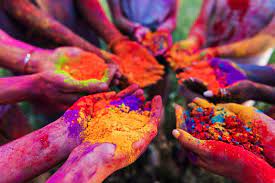
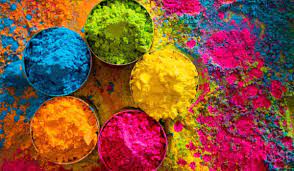
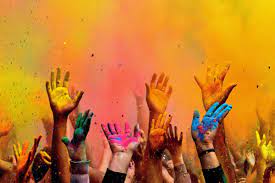
| Holi, also known as the Festival of Colors, is one of the most vibrant and joyous festivals celebrated in India and among Hindu communities around the world. It marks the arrival of spring and the victory of good over evil. The festival is a time of unbridled enthusiasm, where people come together to indulge in merrymaking, laughter, and the spreading of love and happiness.Preparations for Holi typically begin weeks in advance, with markets bustling with activity as people shop for brightly colored powders, known as "gulal," and water guns and balloons to drench each other in colored water. As the day of Holi approaches, excitement fills the air, and communities gather to build large bonfires known as "Holika Dahan." These bonfires symbolize the triumph of virtue over vice, echoing the legend of Prahlad and Holika from Hindu mythology.
|
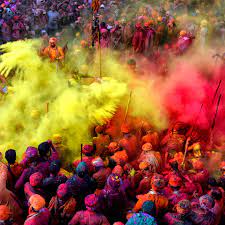 |
| On the day of Holi, streets and neighborhoods transform into a kaleidoscope of colors as people of all ages come together to play and celebrate. Laughter rings out as friends and family chase each other, smearing colorful powders on faces and splashing water with playful abandon. It's a time when social barriers dissolve, and strangers become friends, united in the spirit of joy and camaraderie.Traditional Holi delicacies such as gujiya (sweet dumplings), thandai (a flavored milk drink), and puran poli (sweet flatbread) are shared among loved ones, adding to the festive atmosphere. Music fills the air, with traditional Holi songs, or "Holi hai!" chants, adding to the jubilant mood.Holi is not just about revelry; it's also a time for reflection and renewal. As the colors of Holi wash away past grievances and misunderstandings, it offers an opportunity for forgiveness and reconciliation. It's a time to let go of negativity and embrace the promise of a fresh start, much like the arrival of spring brings new life to the earth. |