|
Vaisakhi
|
|
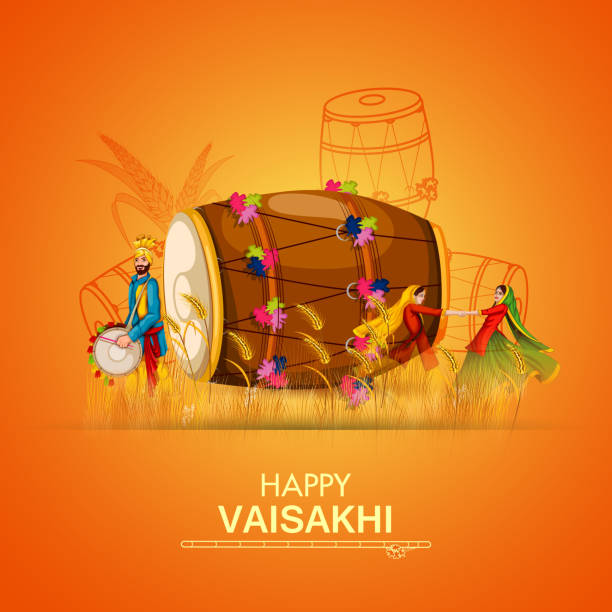
Vaisakhi, also pronounced Baisakhi as well as Basoa (among Dogras),[9] marks the first day of the month of Vaisakh and is traditionally celebrated annually on 13 April and sometimes 14 April.It is seen as a spring harvest celebration primarily in Northern India.Further, other Indian cultures and diaspora celebrate this festival too.Whilst it is culturally significant as a festival of harvest, in many parts of India, Vaisakhi is also the date for the Indian Solar New Year.
For Sikhs, in addition to its significance as the harvest festival,during which Sikhs hold kirtans, visit local gurdwaras, community fairs, hold nagar kirtan processions, raise the Nishan Sahib flag, and gather to socialize and share festive foods,Vaisakhi observes major events in the history of Sikhism and the Indian subcontinent that happened in the Punjab region.Vaisakhi as a major Sikh festival marks the birth of the Khalsa order by Guru Gobind Singh, the tenth Guru of Sikhism, on 13 April 1699.Later, Ranjit Singh was proclaimed as Maharaja of the Sikh Empire on 12 April 1801 (to coincide with Vaisakhi), creating a unified political state,
Vaisakhi was also the day when Bengal Army officer Reginald Dyer orders his troops to shoot into a protesting crowd, an event which would come to be known the Jallianwala Bagh massacre; the massacre proved influential to the history of the Indian independence movement.
|
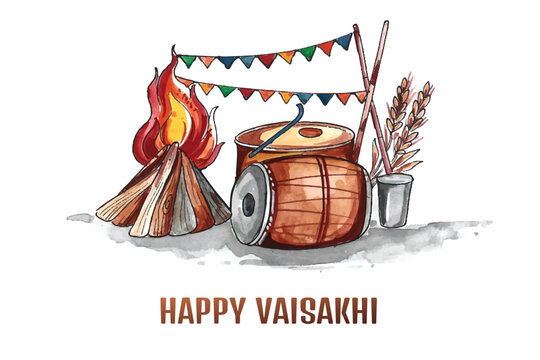 |
|
The word Vaisakhi or Baisakhi is an Apabhraṃśa form evolved from the word Vaishākhī (वैशाखी), derived from the name of the Indian month of Vaishakha.There is no distinction between sounds 'sha' (श) & 'sa' (स)and between 'va' (व) & 'ba' (ब) in Prakrit & Apbhramsa.Hence the name, Vaisakhi or Baisakhi. In tonal languages like Bengali, it is pronounced as 'Boishakhi'.Vaisakhi which is observed on Sankranti of Vaisakh (Vaishakh) month literally means 'related to Vaisakh month', which in turn is derived from the name of a Nakshatra known as Vishakha.In Punjab region, the word Vaisakhi is common, but in the Dogra regions, and the Doabi and Malwai dialects of Punjab, speakers often substitute a B for a V, so it is known as Baisakhi or Basakhi; also people in Jammu call it Basoa.The spelling used depends on the region of the speaker. |
 |
 |
 |
 |
|
HOME |