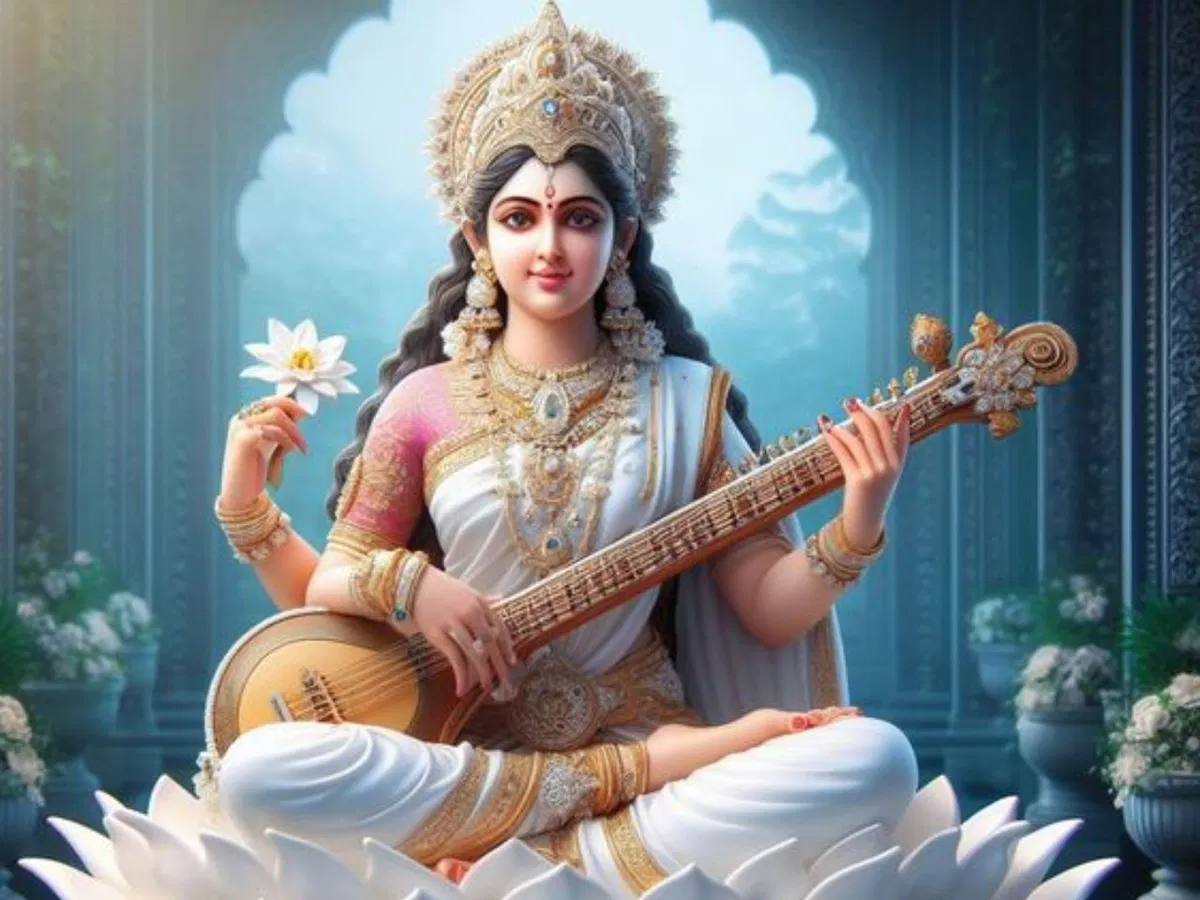
Vasant Panchami, also rendered Vasanta Panchami and Saraswati Puja in honour of the Hindu goddess Saraswati, is a festival that marks the preparation for the arrival of spring. The festival is celebrated in Indian religions in different ways depending on the region.Vasant Panchami also marks the start of preparation for Holika and Holi, which take place forty days later. The Vasant Utsava (festival) on Panchami is celebrated forty days before spring, because any season's transition period is 40 days, and after that, the season comes into full bloom.
As Saraswati is the Goddess of learning, it is a popular festival among students in various parts in India, namely the stares of Orissa, West Bengal and Bihar. Schools and colleges remain closed on the day of puja and it celebrated on the fifth day in the month of Maagh (January-February). The worship takes place on Vasant Panchami when the paddy field is in full bloom and hence it is also considered as a harvest festival. Students gladly stay away from their books on this day and a learned priest performs the rituals of the puja.
|  |


