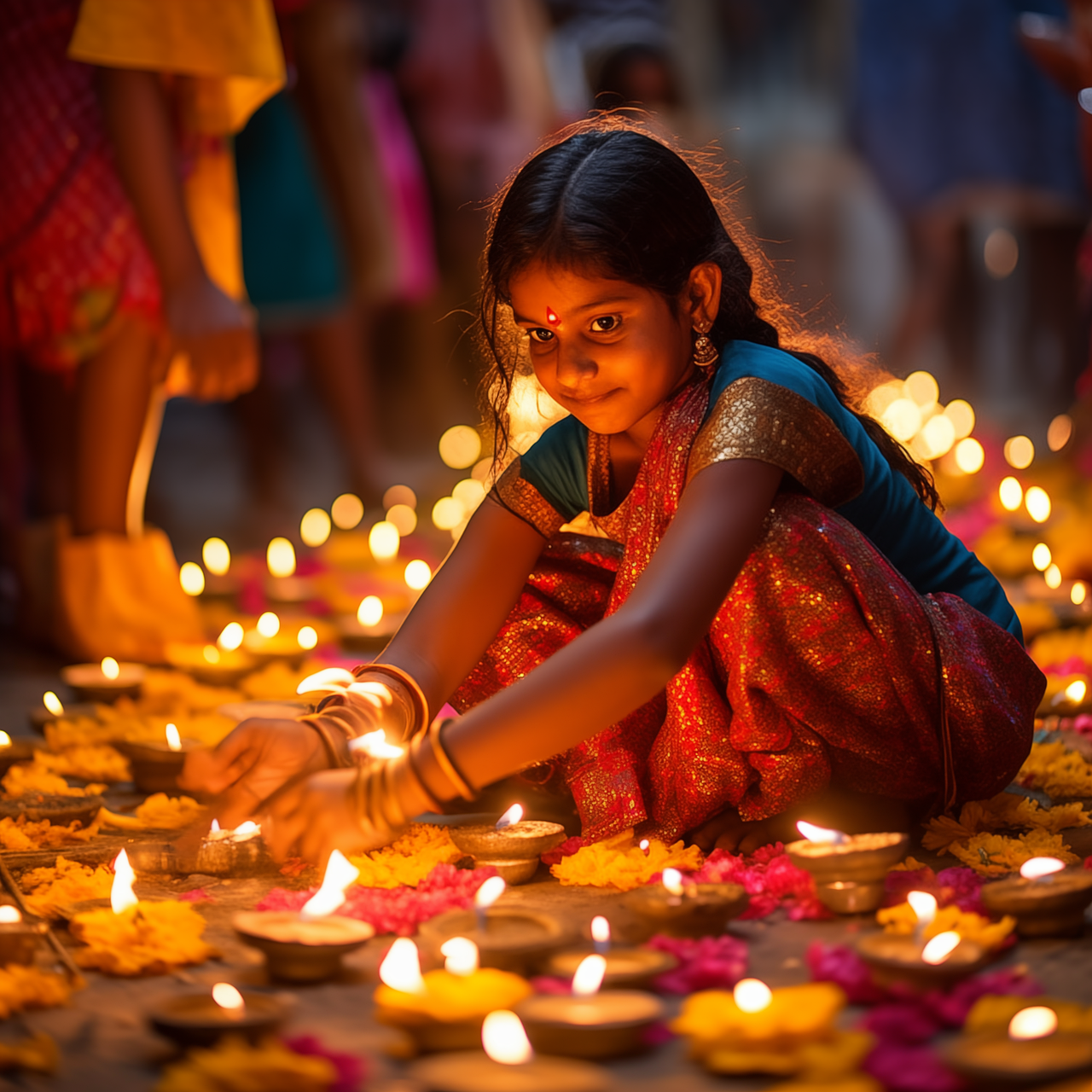
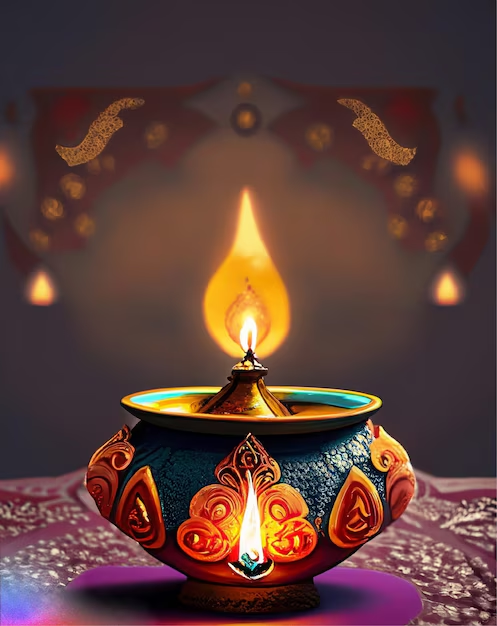
| Diwali, or Dipawali, is India's biggest and most important holiday of the year. The festival gets its name from the row (avali) of clay lamps (deepa) that Indians light outside their homes to symbolize the inner light that protects from spiritual darkness.
Diwali is connected to various religious events, deities and personalities, such as being the day Rama returned to his kingdom in Ayodhya with his wife Sita and his brother Lakshmana after defeating the demon king Ravana. It is also widely associated with Lakshmi, the goddess of prosperity, and Ganesha, the god of wisdom and the remover of obstacles. Other regional traditions connect the holiday to Vishnu, Krishna, Durga, Shiva, Kali, Hanuman, Kubera, Yama, Yami, Dhanvantari, or Vishvakarman. |
 |
Diwali is celebrated over five days.
DAY ONE: People clean their homes and shop for gold or kitchen utensils to help bring good fortune.
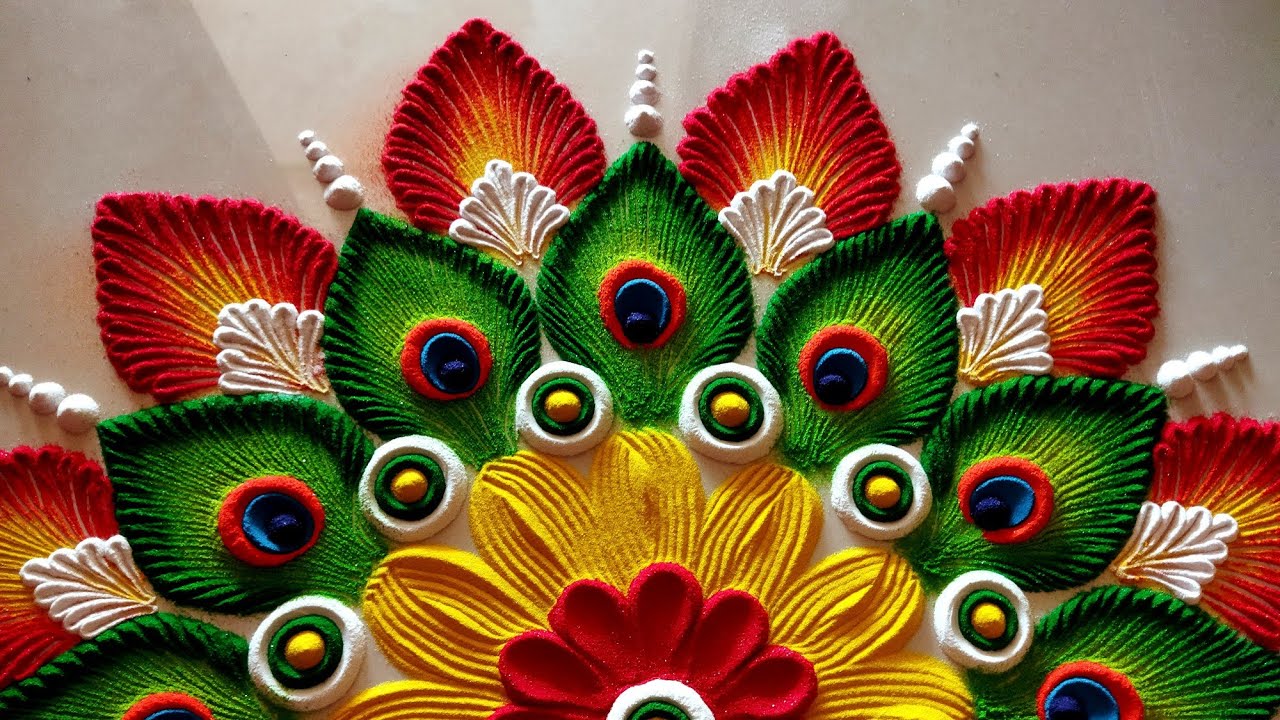
DAY TWO: People decorate their homes with clay lamps and create design patterns called rangoli on the floor using colored powders or sand.
DAY THREE: On the main day of the festival, families gather together for Lakshmi puja, a prayer to Goddess Lakshmi, followed by mouth-watering feasts and firework festivities.
DAY FOUR: This is the first day of the new year, when friends and relatives visit with gifts and best wishes for the season.
DAY FIVE: Brothers visit their married sisters, who welcome them with love and a lavish meal.
In northern India, they celebrate the story of King Rama's return to Ayodhya after he defeated Ravana by lighting rows of clay lamps.
Southern India celebrates it as the day that Lord Krishna defeated the demon Narakasura.
In western India the festival marks the day that Lord Vishnu, the Preserver (one of the main gods of the Hindu trinity) sent the demon King Bali to rule the nether world. |