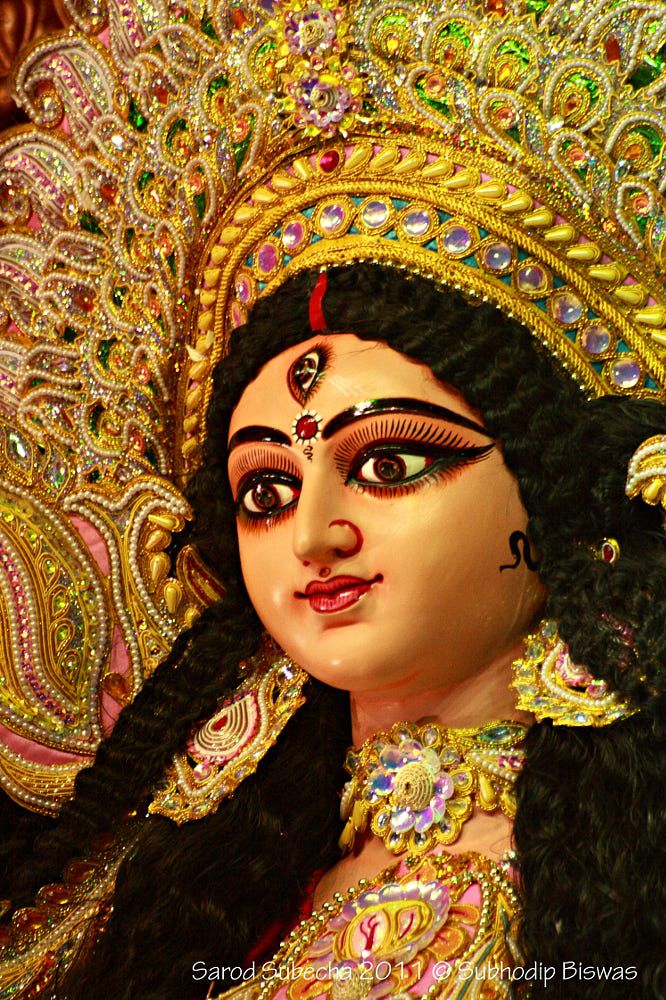
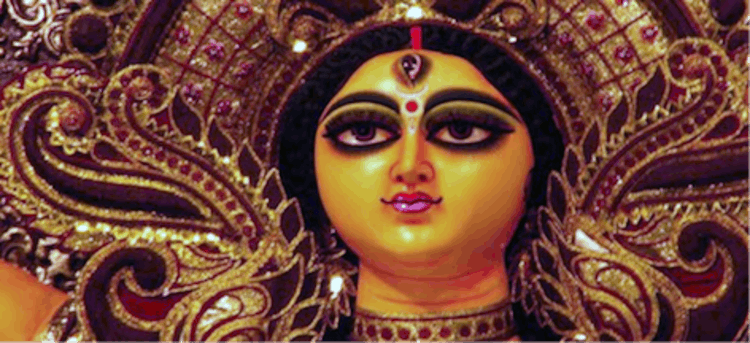
Durga Puja, major festival of Hinduism, traditionally held for 10 days in the month of Ashvina (September–October), the seventh month of the Hindu calendar, and particularly celebrated in Bengal, Assam, and other eastern Indian states. Durga Puja celebrates the victory of the goddess Durga over the demon king Mahishasura. It begins on the same day as Navratri, a nine-night festival in many northern and western states that more broadly celebrates the divine feminine (shakti).
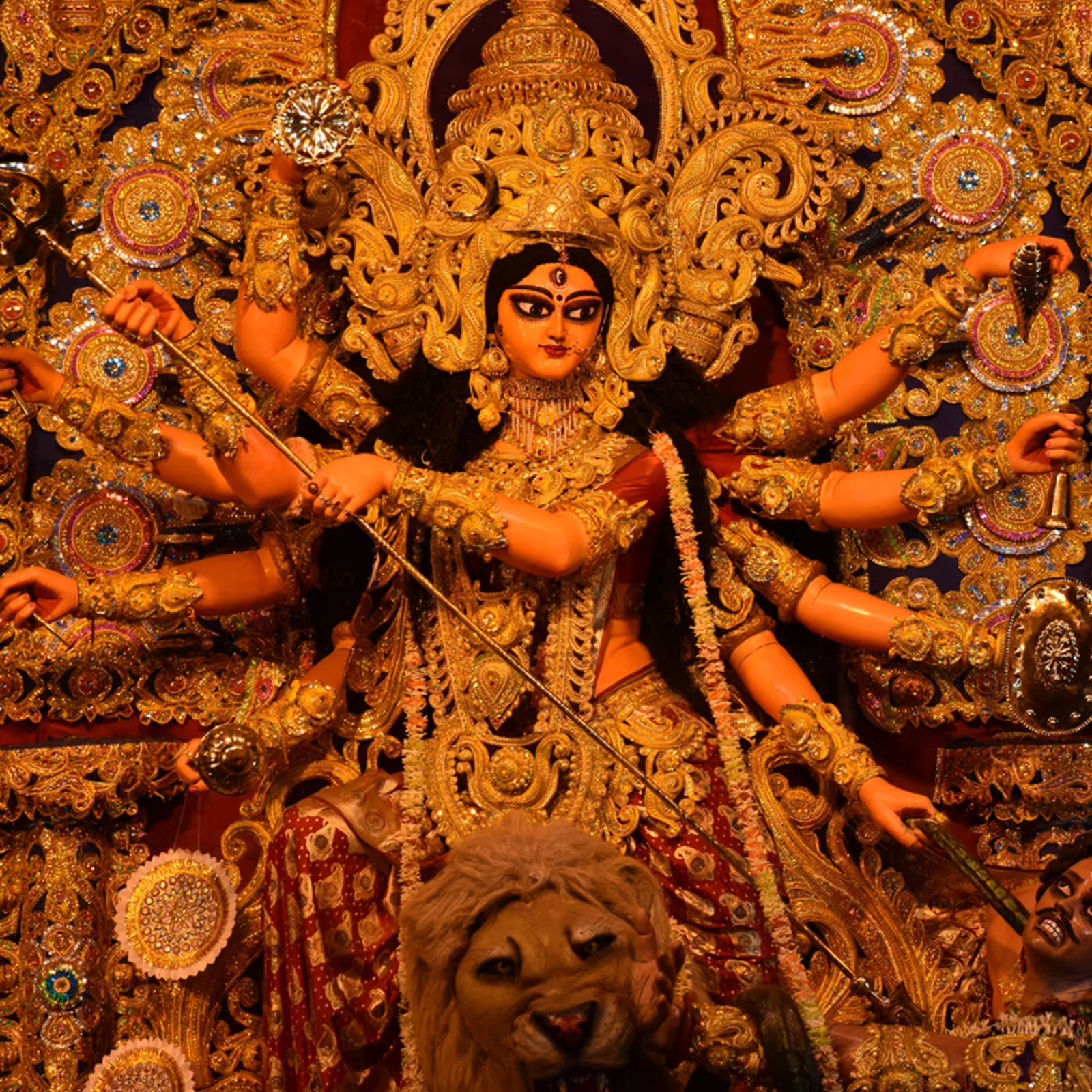
Durga Puja’s first day is Mahalaya, which heralds the advent of the goddess. Celebrations and worship begin on Sasthi, the sixth day. During the following three days, the goddess is worshipped in her various forms as Durga, Lakshmi, and Sarasvati. The celebrations end with Vijayadashami (“Tenth Day of Victory” ), when, amid loud chants and drumbeats, sacred images are carried in huge processions to local rivers, where they are immersed. That custom is symbolic of the departure of the deity to her home and to her husband, Shiva, in the Himalayas. Images of the goddess—astride a lion, attacking the demon king Mahishasura—are placed at various pandals (elaborately decorated bamboo structures and galleries) and temples. |
 |
The ceremonies bring observance of fast and devotion for ten days, the last four days of the festival namely Saptami, Ashtami, Navami, and Vijaya-Dashami are celebrated with much sparkle and magnificence in India, especially in Bengal and overseas.The Durga Pooja celebrations differ based on the place, customs, and beliefs. Things differ to the extent that somewhere the festival is on for five days, somewhere it is for seven and somewhere it is for complete ten days. Joviality begins with ‘Shashti’ – sixth day and ends on the ‘VijayaDashmi’ – the tenth day.
Goddess Durga was the daughter of Himalaya and Menka. She later became Sati to get married to Lord Shiva. It is believed that the festival of Durga pooja started since the time Lord Rama worshipped the goddess to get a grant of powers from her to kill Ravana.
Some communities, especially in Bengal the festival is celebrated by decorating a ‘pandal’ in the close regions. Some people even worship the goddess at home by making all the arrangements. On the last day, they also go for immersing the statue of the goddess into the holy river the Ganges. |