Flights
 Hotels
 Homestays & Villas
 Holiday Packages




.svg) Flights
Hotels
Homestays & Villas
Holiday Packages
Flights
Hotels
Homestays & Villas
Holiday Packages


Sandakphu, perched at 3,636 meters (11,941 feet) above sea level, is the highest peak in West Bengal
and one of the most breathtaking trekking destinations in India. Known as the "Trekker's
Wonderland," Sandakphu offers panoramic views of some of the world’s highest peaks, including four
of the five tallest mountains: Everest, Kanchenjunga, Lhotse, and Makalu. On clear days, the
majestic "Sleeping Buddha" formation is visible, where the peaks of Kanchenjunga and its neighboring
summits align to resemble the shape of a reclining figure.
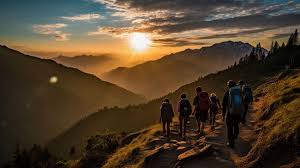
The journey to Sandakphu is an adventure in itself. Trekkers pass through rhododendron forests,
bamboo groves, and sprawling meadows that change color with the seasons. In spring, vibrant
rhododendron blooms add color to the landscape, while winter transforms Sandakphu into a snow-clad
wonderland. The trek, which typically begins from Manebhanjan, is challenging yet incredibly
rewarding, with diverse flora and fauna, including sightings of red pandas and Himalayan black
bears.
Sandakphu's viewpoints are some of the best in the world, especially for mountain lovers. Watching
the sunrise over Kanchenjunga and witnessing the peaks bathed in golden light is a surreal
experience. As night falls, the clear skies and high altitude make it a perfect place for
stargazing, with countless stars visible in the sky.
Local villages like Tumling and Kalipokhri, which dot the trekking route, offer warm hospitality,
local cuisine, and a glimpse into the life of the Himalayan people. These villages, set against the
backdrop of vast mountain ranges, add to the charm and cultural richness of the Sandakphu trek.
Sandakphu is more than just a peak; it’s a journey into the heart of the Himalayas, where nature’s
grandeur is on full display. For those who embark on this trek, Sandakphu promises a
once-in-a-lifetime experience of natural beauty, adventure, and a sense of tranquility that only the
mountains can offer.


The Sandakphu Trek is one of India’s most famous and scenic treks, taking adventure seekers to the
highest point in West Bengal at an altitude of 11,930 feet. Known as the "Trekker’s Wonderland,"
Sandakphu offers unparalleled views of four of the world’s five tallest peaks: Mount Everest,
Kanchenjunga, Lhotse, and Makalu. This trek, part of the Singalila Ridge bordering India and Nepal,
winds through dense forests, rhododendron fields, and alpine meadows, making it a thrilling
experience for nature lovers and trekking enthusiasts.
The trek usually begins from Manebhanjan, a small town around 26 km from Darjeeling. From there, the
journey spans 4-6 days, covering approximately 52 km. The route passes through charming Himalayan
villages like Tumling and Kalipokhri, where trekkers can experience the region’s unique culture and
stay in cozy tea houses. The trail offers diverse terrains – one day you’re walking through pine
forests, and the next, through open meadows dotted with colorful rhododendrons (especially beautiful
in April-May) or covered with snow in winter.
One of the highlights of the Sandakphu Trek is Phalut, another viewpoint close to Sandakphu, which
gives trekkers a 360-degree view of the majestic Himalayas. Reaching Sandakphu itself is a memorable
experience; standing at the peak, you can see the entire “Sleeping Buddha” formation, a series of
peaks including Kanchenjunga, that appear like a reclining Buddha. The sunrise views from Sandakphu
are legendary, with the peaks glowing in hues of pink and orange against the morning sky, creating a
surreal experience.
Accommodation along the route is basic, with trekkers staying in local tea houses and lodges that
offer a warm meal and a place to rest. The trek can be challenging due to steep ascents, rocky
paths, and high altitude, but it’s generally considered suitable for moderately experienced trekkers
with good physical fitness. The best time for the trek is from April to May and October to November,
when the weather is clear, and the views are most spectacular. Winter treks are also popular for
those seeking a snowy adventure, though they require extra preparation.
The Sandakphu Trek is a mesmerizing blend of adventure, nature, and culture, offering trekkers a
rare opportunity to see some of the world’s highest peaks up close while immersing in the beauty of
the Eastern Himalayas. With its vibrant landscapes, mountain views, and warm village hospitality,
this trek is a bucket-list experience for anyone seeking a Himalayan adventure.
The "Sleeping Buddha" formation of Sandakphu is a spectacular and iconic sight, captivating
trekkers and nature lovers with its unique shape and grandeur. From Sandakphu’s summit, the peaks of
the Kanchenjunga range align in a way that resembles a massive, reclining Buddha, hence its name.
This natural marvel stretches across the horizon, with different peaks forming distinct parts of the
figure.
In this formation, Kanchenjunga represents the chest, while Kumbhakarna (also known as
Jannu) appears as the Buddha’s face, and the smaller peaks surrounding it form the limbs, completing
the illusion of a figure lying peacefully on its back. The sheer size and scale of the Sleeping
Buddha make it awe-inspiring, especially at dawn when the first light illuminates the peaks in
golden hues, creating a surreal, almost mystical atmosphere.
Witnessing the Sleeping Buddha from Sandakphu is a once-in-a-lifetime experience, as the view often
seems to change with the weather, lighting, and time of year. On clear days, this formation stands
out sharply against the sky, with the vibrant colors of the sunrise or sunset casting dramatic
shadows that accentuate its contours. This natural wonder holds cultural significance for locals,
who often speak of the formation with reverence, and has become a highlight for trekkers seeking a
true Himalayan experience.