

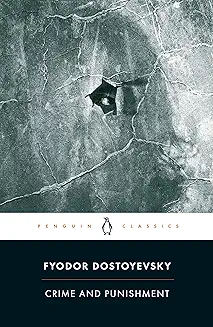
Crime and Punishment is a novel by the Russian author
Fyodor Dostoevsky. It was first published in the literary journal The Russian Messenger in twelve monthly
installments during 1866. It was later published in a single volume. It is the second of Dostoevsky's full-length
novels following his return from ten years of exile in Siberia. Crime and Punishment is considered the first great
novel of his mature period of writing and is often cited as one of the greatest works of world literature.
Crime and Punishment follows the mental anguish and moral dilemmas of Rodion Raskolnikov, an impoverished ex-student
in Saint Petersburg who plans to kill an unscrupulous pawnbroker, an old woman who stores money and valuable objects
in her flat. He theorises that with the money he could liberate himself from poverty and go on to perform great
deeds, and seeks to convince himself that certain crimes are justifiable if they are committed in order to remove
obstacles to the higher goals of 'extraordinary' men. Once the deed is done, however, he finds himself wracked with
confusion, paranoia, and disgust. His theoretical justifications lose all their power as he struggles with guilt and
horror and is confronted with both internal and external consequences of his deed.